Superhet Project #1

The Crystal Filter

The plan is to build a simple single-conversion superhet using NE602 as the first mixer, and perhaps also as the second mixer (demodulator), although I might save my small supply of NE602 chips and use a simple home-made diode ring mixer as the detector.

I need an IF filter and plan to try different methods over time, starting simple with a crystal filter of the type that was common until the 1960s...
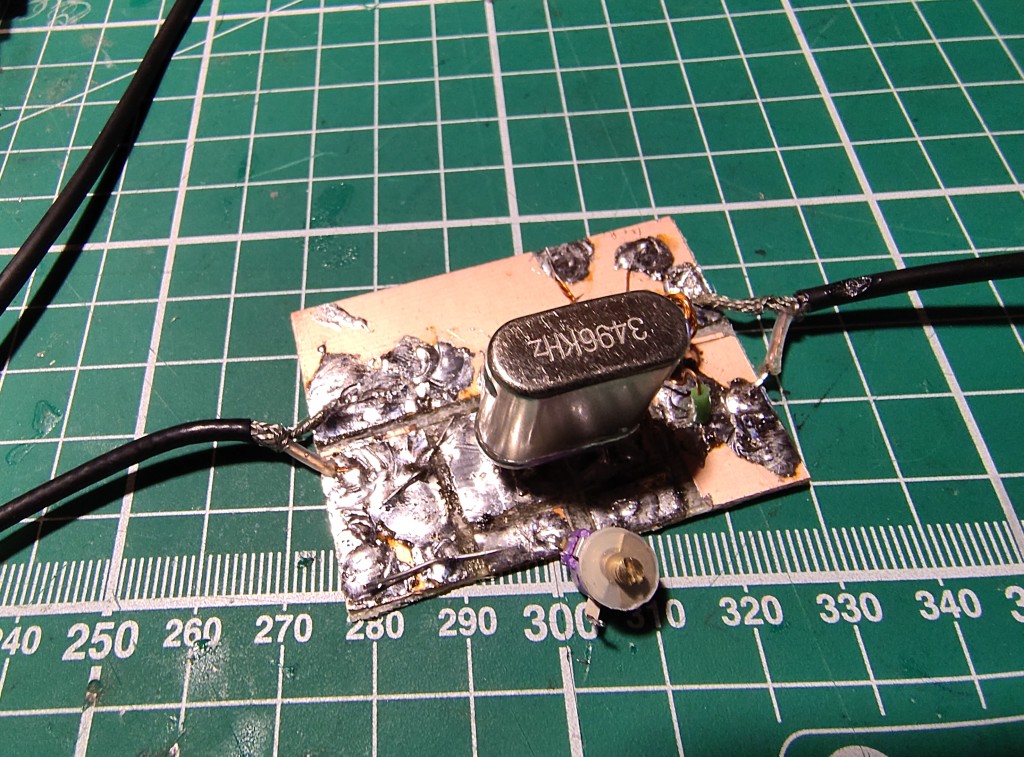
I rummaged through my component drawers and found very few suitable crystals to use in a first experiment. There were two marked 3496kHz (large case, HC50/U ?) and two small 27MHz. I didn't really want a 27MHz IF, so I went with the 3MHz crystals.

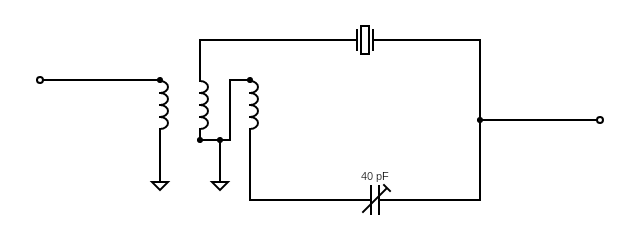
The first iteration of the filter is the design above
I initially tried sweeping it with my Rigol DSA815 Spectrum Analyzer/Tracking Generator - and it looked rubbish... until I realized that I needed to severely reduce the resolution bandwidth... which greatly slowed the sweep rate... and after a while I gave up and swapped to the NanoVNA, which instantly showed the swept response I was expecting, with a sharp peak and a deep notch to one side or other of the passband peak. .
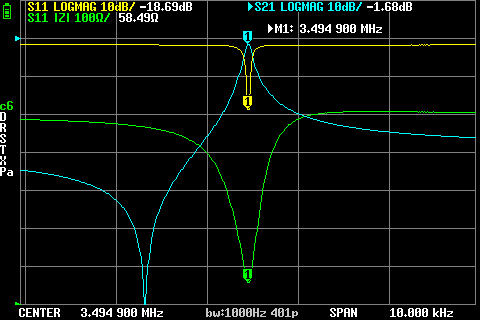
Adjusting the trimmer moves the position of the notch. I decided to find an adjustment that gave a symmetrical response either side of the peak, moving the notch well away LF
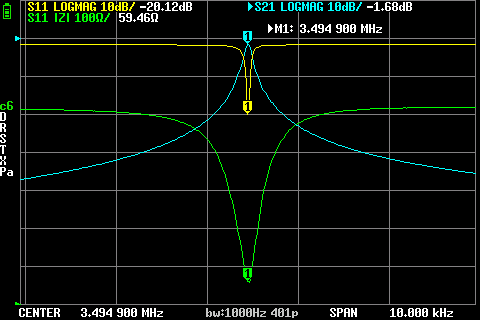
The impedance match was okay without additional input matching - the return loss around 23dB with a |Z| of around 59 ohms.

Passband Measurements

Insertion Loss : 1.56dB
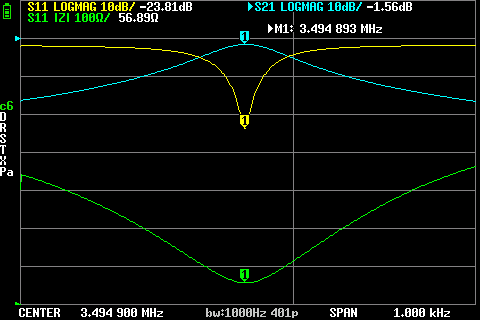
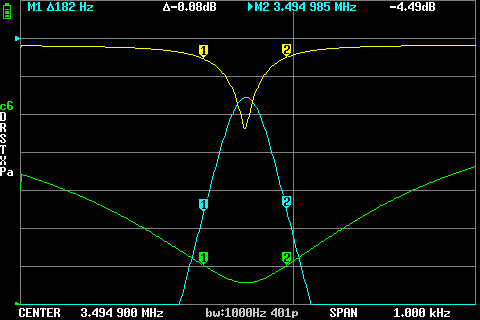
3dB Bandwidth : 182Hz
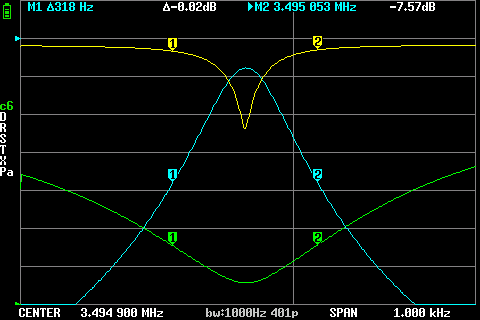
6dB Bandwidth : 318Hz
Half Lattice

I also tried a half-lattice arrangement
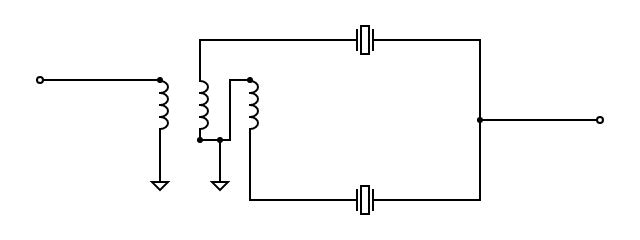
and found that the stop-band attenuation was much greater. The input & output impedances became around 20 ohm and I made small auto-transformers on FT37-43
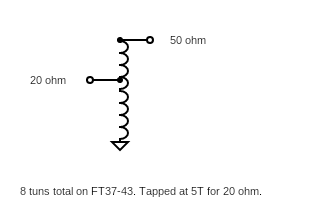
and the input and output matches became better than 18dB.

The response was sharper and I'm not sure how it would sound in a real receiver, and I didn't take any quantitative measurements. For a half-lattice filter I think the xtals should be on slightly different frequencies to give a more defined shape to the passband, rather than a simple peak.

My plan is to use the single-crystal filter at first and see how it performs, and how it sounds on CW signals.

The next iteration should really be a ladder filter of some kind.
Next Projects

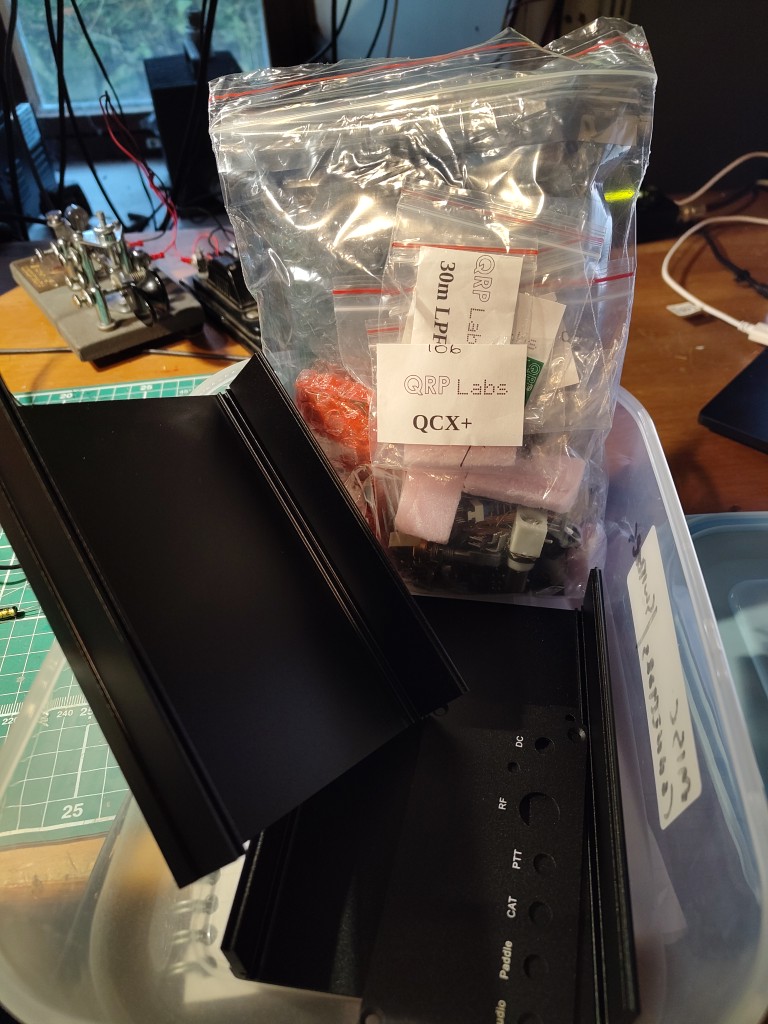
After building a QCX-mini for 40m a few years ago, and a QMX (mini) very recently I decided a few weeks ago to build a QCX+ for 30m to use as my main shack rig, for my main band of 30m.

In the intervening weeks since ordering the QCX+ kit from QRPLabs I finished some old projects that were hanging about in my junk box - a 30m phasing RX and a 30m CW TX - and this combination of separates has become my "main shack rig" for 30m.

The QCX+ kit seems a little redundant now, as I try to move myself away from commercial rigs and into the realm of the 100% homebrewer... but I still would like the fun and experience of building it and having it as an addition to the shack. My self-inflicted "rules" are that I should only use transmitters I've "built" myself - and a kit is still acceptable. So I'm planning to put it aside until I have a free weekend with no other homebrew projects on the go, and I'll build it and add it to the array of 30m rigs in the shack.

My next project is still under consideration - it's likely to be a CW RX for 17m - a band I've never really used but might be fun to try - and this time it'll be a simple superhet1. I'll use it as a test bed for trying different forms of IF crystal filters, starting at a simple "single crystal-with-phasing capacitor" that harks back to the olden-days. This RX also might feature an NE602 or 2 since I've got a few and don't remember ever using one before.


  1. I don't want to go through a full "quadrature phasing RX" build again!

    ↩︎

A new callsign G4SLV 1983

While looking through the wonderful archive of Short Wave Mags at https://www.worldradiohistory.com/UK/Short-Wave-UK I had a look at some from the year I was first licenced, 1983.

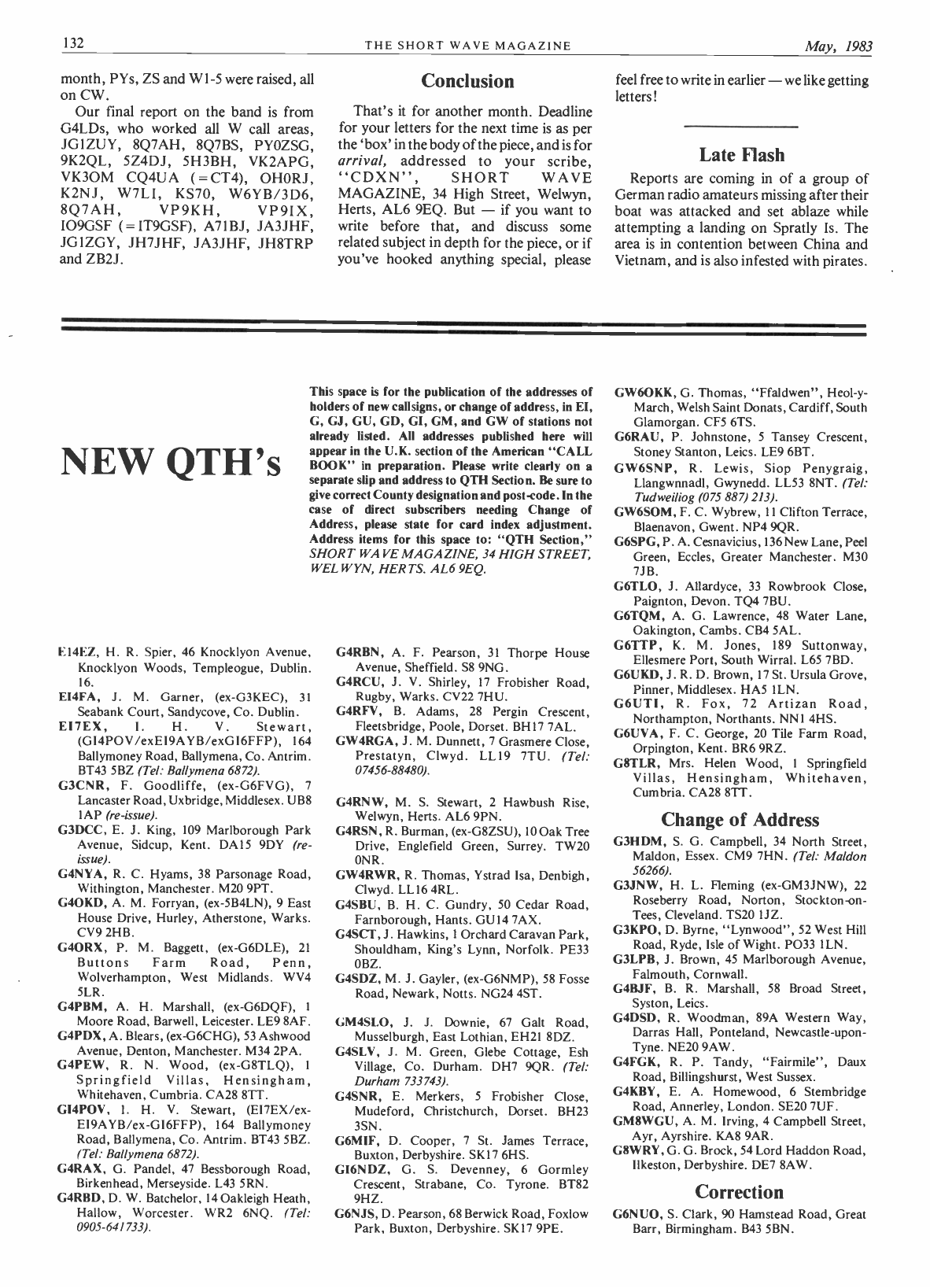
Here's a page from the May 1983 edition of SWM showing me listed as G4SLV ....

And a 'phone number, too. That wouldn't happen these days (it's been 43 years since I lived at that QTH, so it's probably safe to put it on the internet now!)

Soldersmoke

Soldersmoke

I've recently been revisiting the Soldersmoke Podcast. I remember listening to it in its early days, and on and off in the intervening years. I didn't realize that it's been running no for over 20 years!

Before I started to listen to the more recent episodes I thought I'd go back and find the early ones,

read more

Going All In With QRP?

Going All In With QRP?

I've been mulling over my real interests in amateur radio (again) and it's still firmly in the realm of HF and CW. And I've always had more fun playing with simple stuff and QRP.

Pros of QRP

With QRP

  • you don't need to worry about huge DC supply currents and suitable wiring sizes, and high current PSUs.
  • you don't need to worry about the ratings of components as much - lower voltage capacitors, smaller toroidal cores. Everything is much easier (and cheaper).
  • you don't need to worry about high RF levels in the shack - or adjacent to the antenna (thinking EMF safety etc.)
  • it's much easier to build equipment.

read more